
Virtual assistants have become crucial in today's economy, driven by the need for businesses to remain agile and competitive. One of the main reasons these professionals are essential today is that they let a business add dependable capacity for recurring work without building a whole in-house function first.
Moreover, EAs offer the flexibility that modern businesses demand. As your needs change, you can easily scale up or down the support you require. This adaptability is particularly valuable in industries with fluctuating workloads, allowing companies to maintain operational efficiency without overcommitting resources.
Top Industries Where Virtual Assistants are Boosting Business Growth
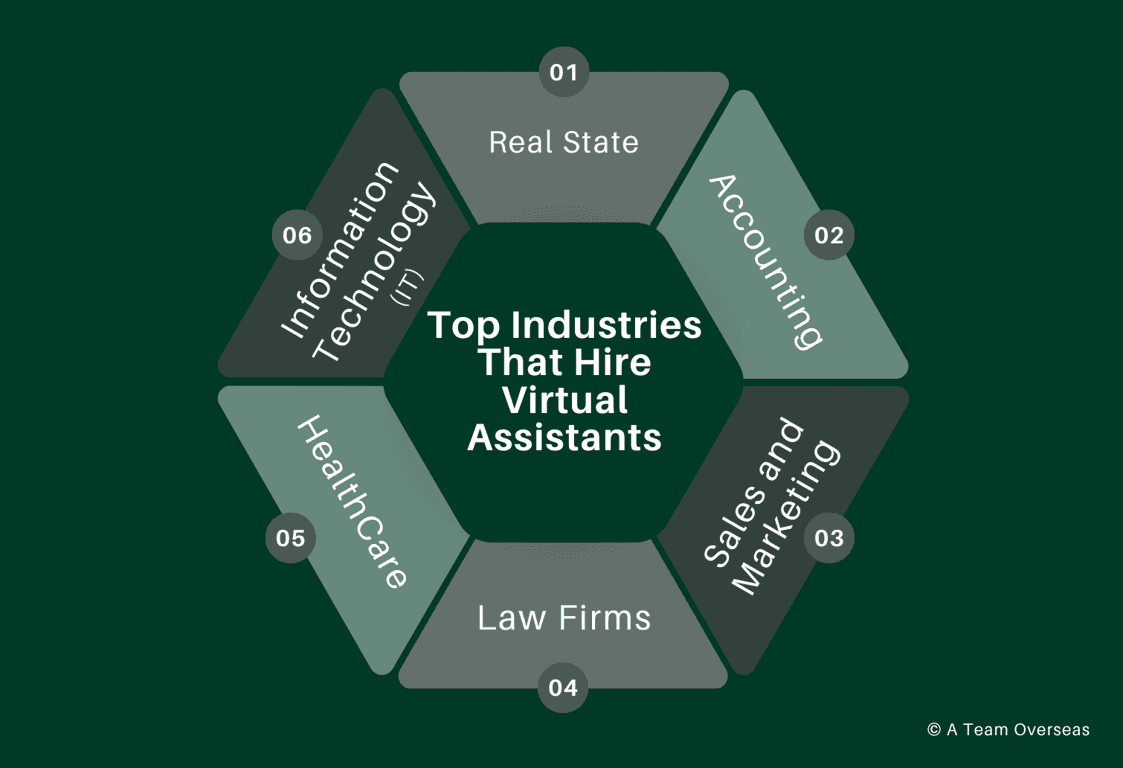
In today's fast-paced business environment, more companies are discovering the game-changing potential of virtual assistants (VAs) across diverse industries. In fact, you've likely heard of a "virtual assistant" or know someone who has one by now. But the more you learn about them, the more you begin to ask yourself, "Does a virtual assistant make sense to hire in my industry?" Here are a few examples of how virtual assistants have created impact in key industries:
E-commerce
Online businesses can leverage VAs for more than just customer service and social media engagement. eCommerce operations can also benefit from virtual assistants in order processing, inventory management, managing product listings, inventory tracking, and other functions like updating product descriptions and monitoring stock levels to maintain seamless operations.
This versatility makes eCommerce a major player in the VA market. In 2023, global eCommerce sales reached $5.5 trillion according to Statista. This drove business owners to rely on virtual assistants to help manage high volumes of orders and other operational tasks, as they focus on business development.
Real Estate
Real estate agents and other professionals are discovering that virtual assistants can be invaluable partners in managing their growing businesses. Your VA can handle property listings, schedule viewings, manage client communications, and even help with social media marketing. You can also leverage virtual assistants for customer support, lead generation, maintaining client databases, and coordinating with vendors for repairs. This support allows you to focus on what truly matters – meeting clients and closing deals. A report by the National Association of Realtors found that 92% of buyers use the Internet during their home search - this highlights the need for support to help fill in any potential gap.
Medical and Healthcare
In the healthcare sector, virtual assistants are transforming patient care by taking on crucial administrative responsibilities. Your medical practice can benefit from VAs handling appointment scheduling, insurance verification, and basic patient follow-ups. This administrative support allows healthcare providers to minimize burnout and dedicate more time to patient care. More than that, they can also take on more sensitive work such as managing patient records, processing billing documentation, and coordinating with insurance companies.
Medical virtual assistants are often trained to be HIPAA compliant ensuring that patient confidentiality and data security are maintained to the highest standards. According to a report by The Business Research Company, the global healthcare services market size is expected to grow to over $11222.08 billion. As healthcare providers face this increasing demand, virtual assistants can become a trustworthy extension of your practice.
Professional Services
Law firms are discovering that virtual assistants can significantly impact their bottom line. According to the American Bar Association, 45% of law firms are already choosing to hire virtual assistants or plan to do so, highlighting the trend toward outsourcing in the legal sector.
Law firms, accounting firms, and financial advisors frequently use VAs to handle administrative work. However, your legal practice can stand to utilize them more through legal research, client intake, and calendar management. This support enables attorneys to focus on billable activities and complex legal work.
Marketing and Advertising
More and more marketing agencies and firms are now leveraging virtual assistants to not only handle routine tasks but to also take part in creative work. In fact, HubSpot reports that 53% of marketers plan to increase their outsourcing efforts in the coming years, reflecting the growing demand.
Due to their versatility, virtual assistants also commonly work around projects like social media management, market research, and content creation aside from common administrative tasks. Meanwhile, more specialized VAs can also do graphic design, campaign tracking, monitor analytics, and support marketing efforts like SEO and audience building.
Technology (Startups and Tech Companies)
Finally, tech companies, particularly startups, are one of the quickest kinds of businesses to hire VAs to outsource business support. This industry’s fast-paced nature makes flexibility essential, and having an extra pair of hands on deck offers the adaptability needed to keep up with rapid changes. A study by Startup Genome found that successful startups are 16% more likely to outsource non-core activities.
Tech companies typically employ virtual assistants for technical support, data entry, and project management such as coordinating updates and schedules within the team or staying on top of projects. Other than that, virtual assistants can also manage help desk tickets, update documentation, software testing, and more.
Benefits of Hiring Virtual Assistants Across Different Industries
Virtual assistants bring a clear advantage and utility for different industries. But how do you know if you could truly benefit from one? The answer often comes down to the key advantages they bring across the board. Let’s break down the specific ways VAs can benefit businesses across industries.
1. Ownership of Recurring Work:
One of the most compelling reasons to hire a VA is to hand off a repeatable set of work to one person who can own it. A good assistant starts with that work, learns your systems, and grows into running more of the operation with you setting direction.
2. Flexibility and Scalability:
One of the greatest advantages of virtual assistants is their ability to adapt to changing business needs. Whether you need support across different time zones, additional capacity for a busy season, or specialized talent for a short-term project, VAs offer the agility to keep pace with your business goals. They can also pivot their tasks to align with shifting priorities, giving your team the freedom to respond quickly to new opportunities. This flexibility is particularly beneficial in industries like e-commerce and digital marketing, where workloads can fluctuate.
3. Access to Specialized Skills
Virtual assistants bring a wealth of expertise tailored to specific industry needs. Whether you require a digital marketing specialist for social media campaigns, a technical expert for IT support, or a financial analyst for bookkeeping, VAs offer access to highly skilled professionals. This access to specialized skills is particularly valuable in tech and professional services, where niche expertise can be hard to find locally. The World Economic Forum reports that by 2025, nearly 50% of employees will need reskilling. Virtual assistants provide a wide range of specialized services, which help your business fill gaps without long-term commitments or extensive hiring processes.
4. Improved Focus on Core Business Activities:
By outsourcing routine tasks to virtual assistants, your team can focus on high-impact activities that drive growth. This shift allows for better use of internal resources, leading to increased productivity and more strategic decision-making. In industries like healthcare and finance, where precision and attention to detail are crucial, delegating administrative tasks to virtual assistants ensures that your core business functions are prioritized.
Ready to Hire a VA for your business?
While virtual assistants have become a buzzword across industries, their value lies far beyond just being an extra pair of hands. The benefits of hiring a virtual assistant aren't about replacing roles but about elevating how your business operates. Whether it’s lightening the load of routine tasks or unlocking more time for strategic growth, virtual assistants can adapt to the unique demands of different industries in ways that truly make a difference.
By exploring the specific advantages they bring across various fields, you might just uncover how they could be the missing piece to making your workday more productive, efficient, and focused. After all, it's not just about outsourcing—it’s about creating space to focus on what matters most. And to make the most of these benefits, choosing the right hiring service for your organization is crucial.
About A Team Overseas
A membership that finds, places and supports Philippines-based executive, operations and marketing assistants who work on the client's payroll.
- Founders and small teams with named, recurring work who want a guided start, including first-time remote hires.
- Cost: $500/month membership (up to 3 placements a year and 1 free replacement), plus your assistant's pay. Paid directly by the client, $1,200–2,000/month for full-time engagements, by experience tier, agreed before placement.
- We specialize in more senior talent: mid-level assistants who are resourceful, proactive, reliable and AI-enabled.
- Support: Check-ins weekly in month one, then every two weeks or monthly through day 90, then as needed.